Critical infrastructure is no longer merely a technical issue. It has become part of the security domain, facing cyberattacks,
sabotage, threats posed by unmanned systems, hybrid conflicts, disruptions to supply chains, and geopolitical rivalry. Eurosatory
is the world's leading platform where ministries of defence, procurement agencies, technology developers, research institutions,
and industry experts come together to shape the future direction of defence and security technologies.
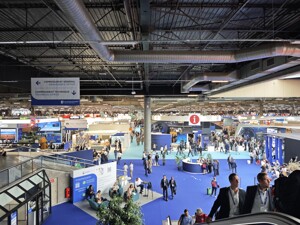
This year's edition, held at the Parc des Expositions Paris-Nord Villepinte exhibition centre, welcomed more than 2,600 exhibitors
from 65 countries, 440 official delegations from 95 states, and showcased a wide range of the latest technological innovations.
It was the largest and most ambitious edition in the history of the exhibition to date. The Strategic Infrastructure Security
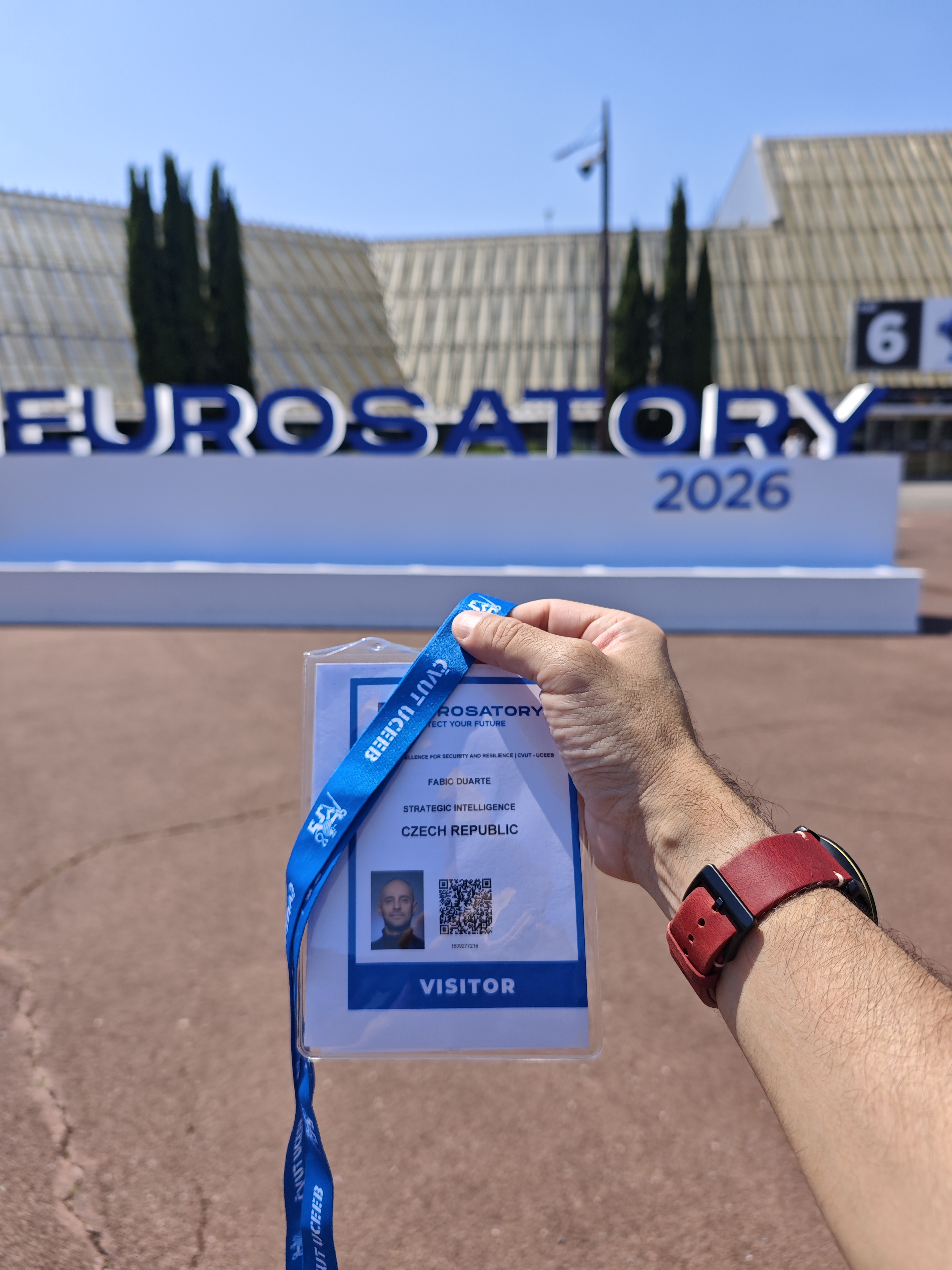
team from the CTU UCEEB was also among the participants.
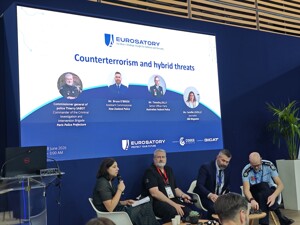
Over the course of five days, our colleague Fabio Iguavita Duarte held meetings with exhibitors and attended expert conferences
dedicated to the monitoring and protection of critical infrastructure, autonomous systems, crisis management platforms, perimeter
protection, and C4ISR (Command, Control, Communications, Computers, Intelligence, Surveillance and Reconnaissance) technologies.
The thematic focus of the exhibition—multi-domain operations, cyberspace, artificial intelligence, global security, counter-unmanned
aircraft systems (C-UAS), and crisis management—was directly aligned with our team's research activities.
One of the most significant observations was the growing role of dual-use technologies. For example, the quadruped robot
developed by Boston Dynamics can be used for military reconnaissance, industrial inspections, and emergency response operations.
Autonomous drones are increasingly being deployed to monitor power lines and pipelines, while artificial intelligence-based
systems enable the detection of anomalies across multiple domains and accelerate decision-making processes. The boundary between
defence and critical infrastructure protection is becoming increasingly blurred, and this is precisely the area in which a
significant part of UCEEB's research is conducted.
Participation in the exhibition provided a systematic opportunity to gather information on emerging technologies, map the
market, establish contacts with industrial partners, and identify opportunities for future collaboration, including within
the Eurosatory Lab section dedicated to technology startups. From the perspective of future cooperation, the national pavilions
of Estonia, Sweden, and Germany were particularly noteworthy, as they consistently combine a strong focus on critical infrastructure
resilience with robust industrial and research capabilities. The Czech Republic was also strongly represented, with its national
pavilion, organised with the support of the Ministry of Industry and Trade, demonstrating the importance of the Czech defence
industry on the European stage.
The next edition of Eurosatory will take place in 2028.