
Cloud service outages not only bring complications for ordinary users, but in the field of assistive technology they are potentially
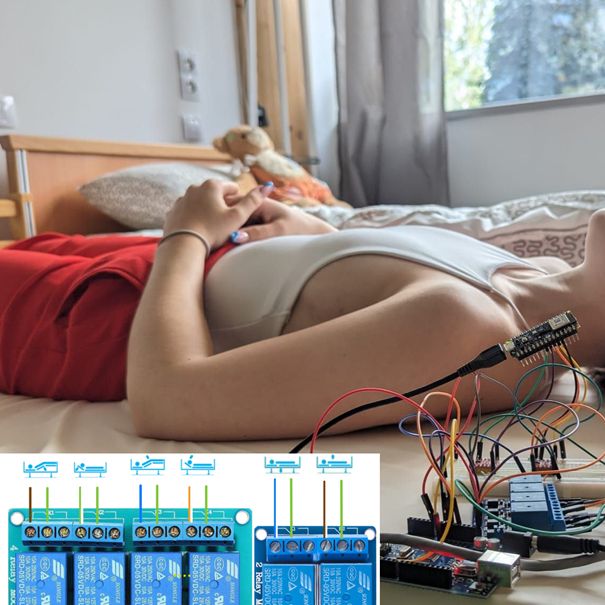
dangerous, especially for people with severe disabilities. The CTU UCEEB has therefore developed a local controller for voice
control of positionable beds without an internet connection. At present, this is the only known solution suitable for people
who cannot press the buttons on the controller and whose speech is severely affected by neurological disease.
In October 2025, the technology world was hit by a major outage of Amazon Web Services cloud services. For ordinary users,
it was just an app outage, but for some smart bed users it meant much more. Their beds started to heat up on their own or
tilt to an uncomfortable position, yet users couldn't change the settings or turn off the heating. This showed that reliance
on remote servers is potentially dangerous in assistive technology. Especially for patients with severe mobility limitations,
non-functional bed controls can pose a health risk.
These threats have long been sought to be prevented by the CTU UCEEB's Personalised Telemedicine Research team, which has developed a fully local,
voice-controlled unit that allows users with severe disabilities - including those with facial paralysis - to control a positionable
bed without an internet connection. The control unit uses a neural network that learns commands from a specific user, including
their pronunciation. The system thus responds reliably even to speech impediments or non-standard diction, completely cloud-free.
Offline mode ensures maximum reliability, availability and privacy, regardless of whether servers are currently running somewhere
on the other side of the world.
