 Concrete is the second most consumed material in the world after water. With an annual production of around a staggering 30 billion tonnes, it is unrivalled among building materials. Given its versatility, its popularity is unlikely to diminish in the years to come. On the other hand, the production of cement, which is the main binder of concrete, is responsible for 7-8% of anthropogenic carbon dioxide (CO2) emissions worldwide. The appropriate design of concrete composition can influence not only its mechanical properties, durability and workability, but also its carbon footprint. UCEEB's research aims to reduce this by using biochar, which is an environmentally friendly alternative to traditional admixtures.
When biochar is added to concrete, it permanently binds carbon that could otherwise be released into the atmosphere as carbon dioxide. This reduces the overall carbon footprint of concrete, which is important in the context of combating climate change. The
Composite structures Research Team at UCEEB CTU is looking not only at the environmental benefits of biochar, but more importantly at the conditions under which it can be used in concrete. In particular, we are analysing its effect on mechanical mechanical properties and durability, and in high-value concretes also on autogenous shrinkage.
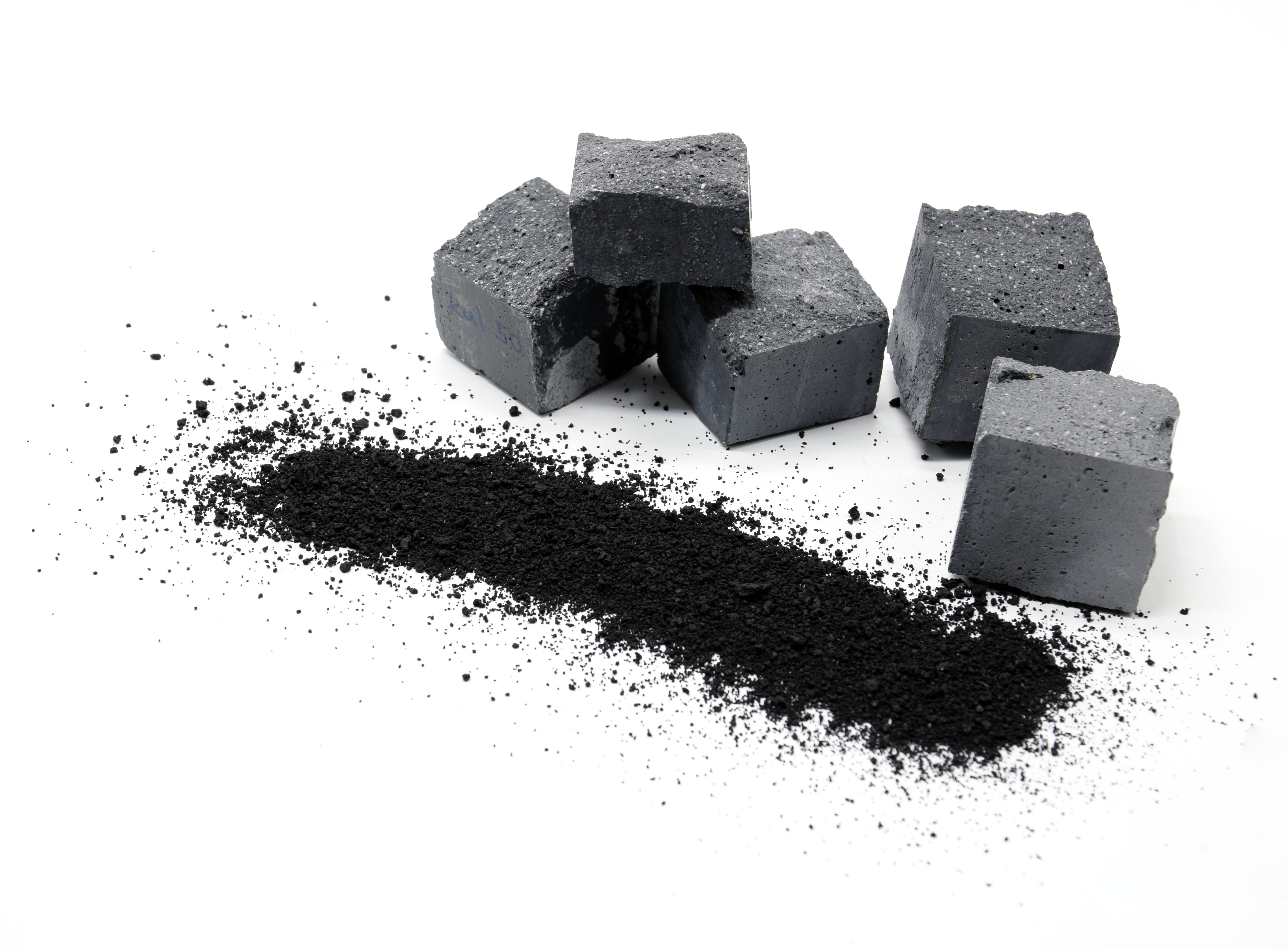
Biochar is a by-product of biomass pyrolysis, the process of heating organic material such as wood, plant residues or other biological materials to high temperatures (typically between 300 and 700 °C) in an environment with little or no air access. This process removes most of the volatile components from the material and leaves behind a carbon-rich solid that has a porous structure. The resulting properties of the biochar depend on the feedstock used, together with the temperature and pyrolysis rate. Biochar has many uses, particularly in agriculture where it is used to increase the creditworthiness of soil, where its porous structure improves its ability to retain water and nutrients.
The project "Possibilities of using natural fibres for the production of hybrid textile reinforcement in concrete" (contract No. 22-14942K) was supported by the Grant Agency of the Czech Republic.